
Ranked against your program
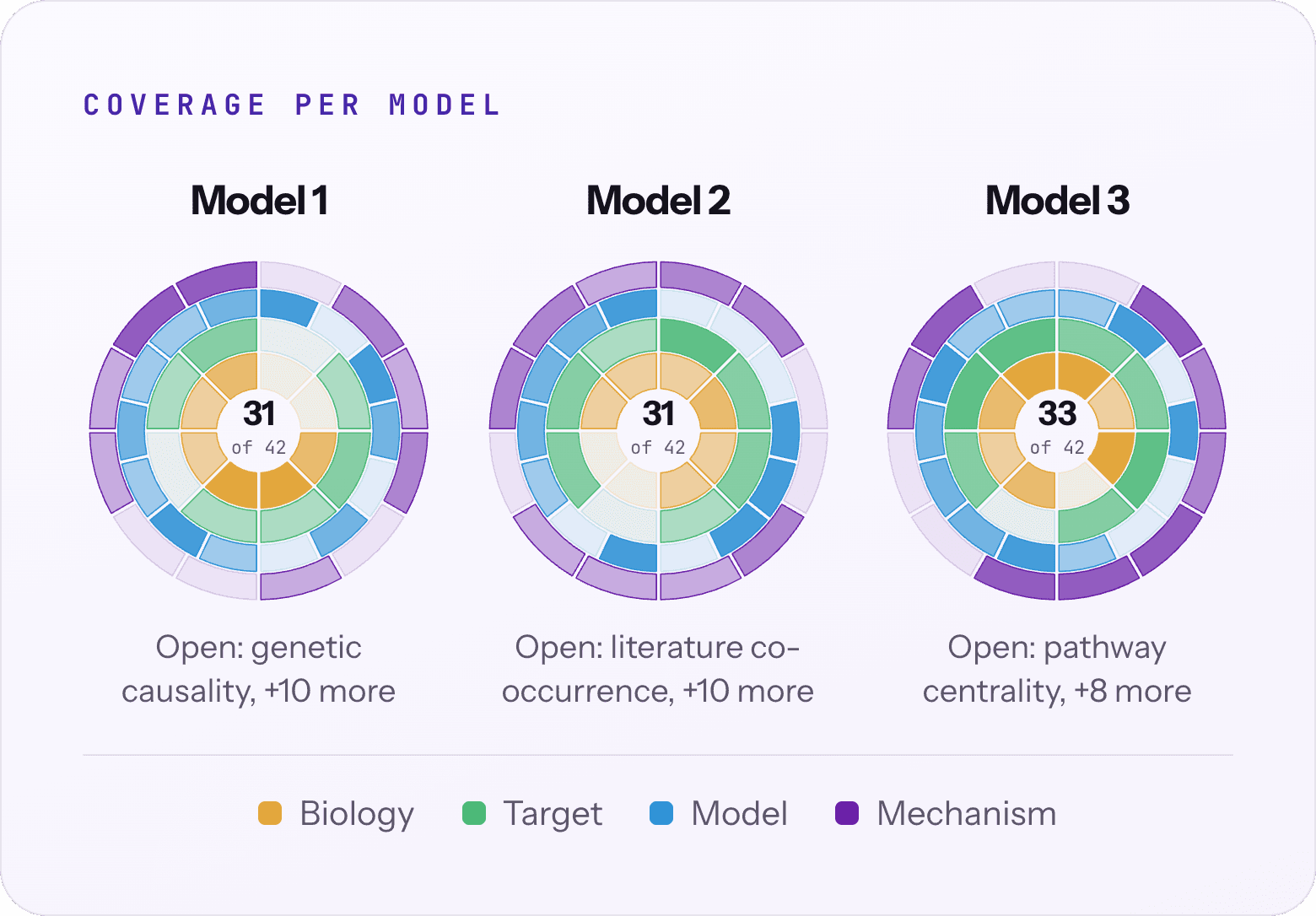
Models are ranked against your specific program context, drawing on a curated knowledgebase of 2,000 organ-on-chip, MPS and organoid systems from academic and industry sources.
It is the question a program is least able to answer and least able to afford getting wrong. Pluto answers it twice: when you choose the model, and when you defend it.
Models are ranked against your specific program context, drawing on a curated knowledgebase of 2,000 organ-on-chip, MPS and organoid systems from academic and industry sources.
If the best available model doesn't clear the bar, you get better-fitting alternatives ranked with the reasoning behind each.
If nothing clears it, Pluto tells you what experiment would close the gap.
Model translatability is the least structured judgment in discovery and the most expensive one to get wrong. It's usually made from experience, in a meeting, and recorded nowhere. It's why we built a second framework just for it: the Biological Fidelity Framework, alongside TAF, purpose-built to score model translatability.
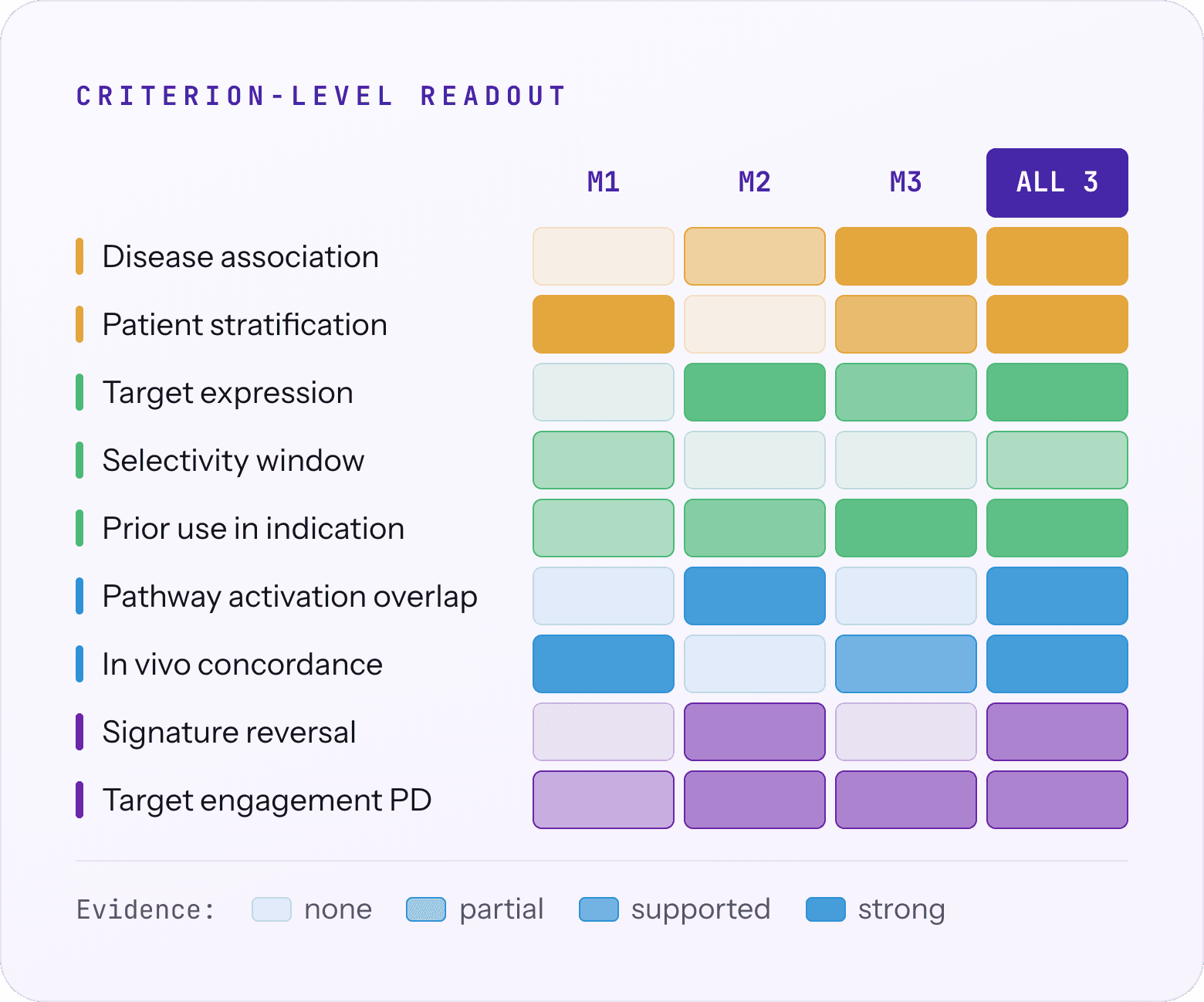
Each of the four dimensions comes back with a status, the evidence behind it and, where there's a gap, the experiment that would close it. It's the page you take into the stage-gate review instead of a slide defended from memory.
Tumour epithelium and fibroblast states match patient single-cell data. No immune compartment.
NextAdd an autologous immune co-culture arm.
Disease signature and key pathway activity track the human reference, not a generic one.
Standard-of-care dose response reproduced across three batches.
No benchmark compound tested against known patient response yet.
NextRun two clinical benchmark compounds with known outcomes.
New approach methodologies are moving from talking points to expectations. Organoids, organ-on-chip, and human-derived systems are changing what counts as a defensible model, and current FDA guidance is moving with them.
The Biological Fidelity Framework assesses model systems on the terms regulators actually use, so evidence generated today still counts when the expectations tighten.
How closely the system reflects human biology, not species-adjacent biology.
Whether disease context, subtype and stage are represented, not just cell identity.
Whether the system produces measurable, mechanism-linked responses.
Whether the result holds across donors, batches and assays.
Bring the model package you already have. We will assess it against the framework and show you what is evidenced and what is assumed.